
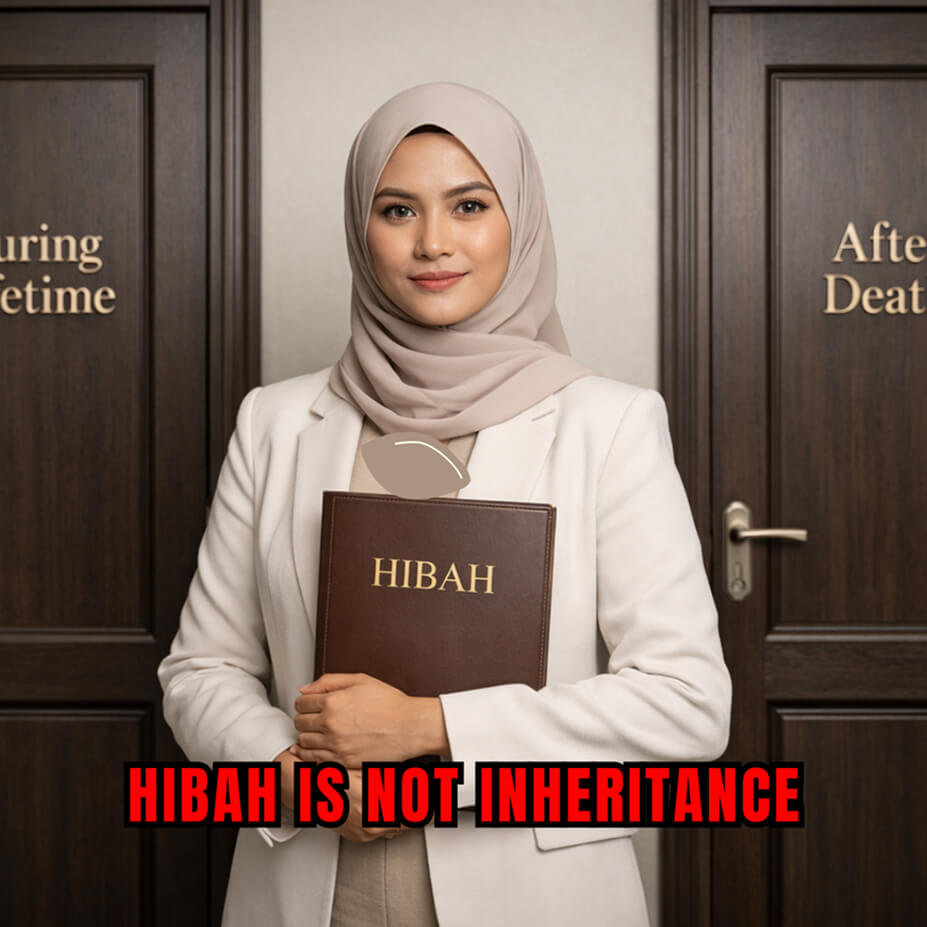
Many people confuse hibah with inheritance. Hibah takes effect during a person’s lifetime, while inheritance only begins after death. When hibah is executed properly, the asset no longer forms part of the deceased’s estate and is not subject to faraid. This is why hibah is a protective legal tool, not a shortcut to bypass the law.
Protecting Loved Ones Early
Hibah is often misunderstood as favouritism, but in reality, it is usually about protection. It is commonly used to ensure that a spouse or children are not left vulnerable, displaced, or entangled in disputes after death. A properly planned hibah can prevent assets from being frozen or contested when the family is already grieving.
Validity Truly Matters
Not every hibah is legally valid. A proper hibah requires clear intention, lawful ownership, and proven transfer of the asset. Weak documentation or verbal promises can easily be challenged. When a hibah is incomplete or defective, the asset may revert to being part of the estate and subject to inheritance laws.
Hibah Can Be Challenged
Hibah is not immune from legal challenge. It may be disputed if there is evidence of coercion, fraud, lack of mental capacity, or improper execution. This is why do-it-yourself hibah arrangements often carry significant risk. Good intentions alone are not enough to protect a hibah from being overturned.
Hibah And Faraid
Hibah does not override faraid; it operates before faraid applies. Faraid only governs assets that remain in the deceased’s ownership at the time of death. Once a valid hibah is completed during lifetime, that asset is no longer part of the estate and therefore not subject to faraid distribution.